Are you HALO Ready?
That's the challenge of rural emergency medicine. The case a large hospital sees twice a year, you might see once — and you still have to get it right the first time. A manual that survives a resuscitation. Equipment somebody can find. A team that has trained the rare thing at least once. Cairn is all three, kept in one place and tied to the department you actually work in — so you are HALO Ready: ready for the high-acuity, low-occurrence case.
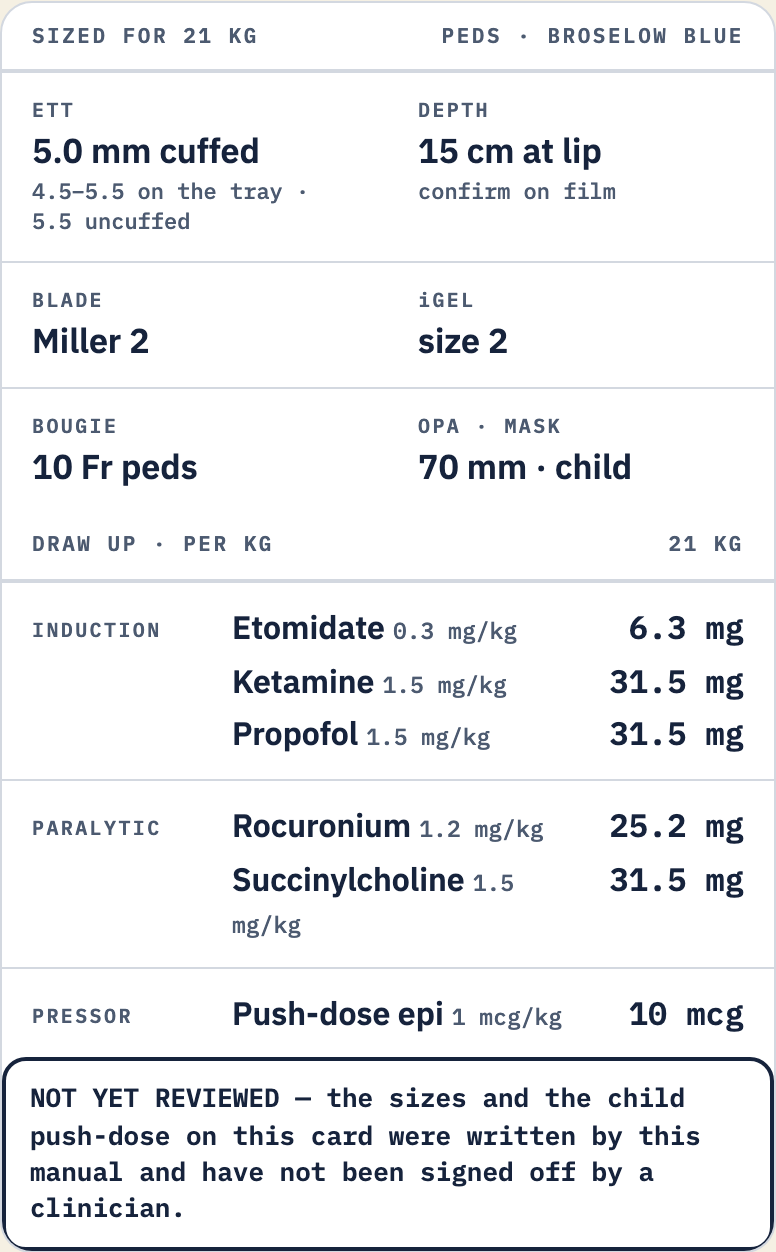
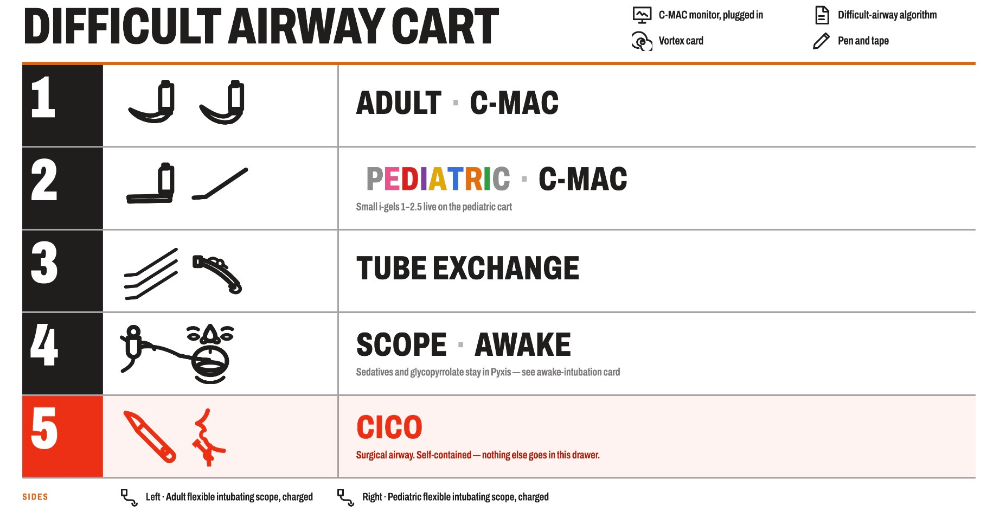
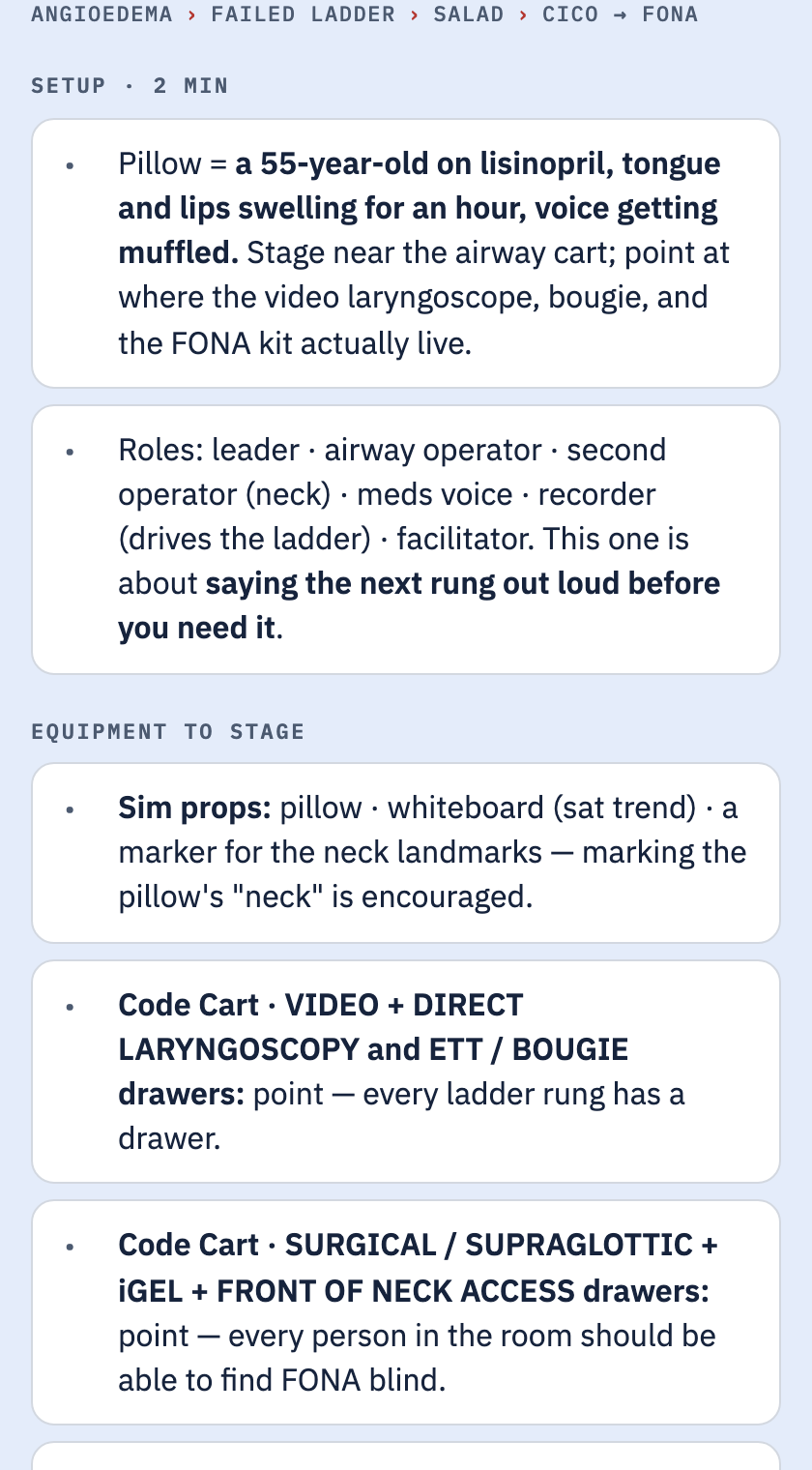
Cards start from published guidance and are rewritten for a bedside that is moving. An automated review sweeps the literature monthly and flags a card when its source changes; a clinician decides what to alter.
Only open publications and national or international standards are used, so anyone can check a card against the thing it came from.
Nothing to read. The generic library is open to anyone with the link, on any device, without an account.
The clinician pays — a physician or an APP, eventually, not the department — and only for the part that makes it theirs: their numbers, their kit locations, their sims and their practice records, hosted and kept current. Beta testers use it free.
Walkers stack stones to mark a route through country where the path disappears. The guide is left by those who came before you. That is the whole design: someone has done this before, and what they learned should be waiting where you need it.
Cairn keeps as little of your data as it can. Here's the details.
Nothing leaves your phone until you sign in. No analytics, no trackers. When you end a case, the case and its log are gone from the phone and not stored by Cairn, but if you export the log and email it to yourself, it is in your email, not with us.
Signing in sends your email address so we can mail you a link. We keep it only as a one-way hash. Our mail vendor, Resend, keeps a delivery log. Our host, Netlify, stores the records encrypted at rest.
Signed in, three records sync so you can switch phones. Each carries the time it was last saved:
- your readiness ratings, if you rated yourself, and your practice log, if you answered LOG THIS AS PRACTICE? with the date and whether it was a real case or a sim;
- your site, including who to call, where the kits are, gaps you found, and your notes;
- your kit list.
The activity log is put together on your phone from the practice log above. Nothing new is kept, and the name you type to print it is never saved or sent.
Who can read them: you. A colleague you approve can read your site record — meaning your description of your organization's capabilities, but never your readiness. Nobody else, including the site owner and the person who runs Cairn, who could read the records but could link them to you only by knowing your email. We do not sell, share, or analyze them.
A court order gets everything above, exactly as stored. Your organization gets nothing from us. Cairn is for you, not people supervising you.
Paying is not switched on yet; beta testers use Cairn free. When it is, Stripe takes the payment and keeps your card, your name, your billing email and address, and your receipts. Cairn never sees your card. Your account will also hold your plan (paid, trainee or beta, and the date it runs through) and Stripe's customer and subscription numbers. If you say you are a resident or medical student, that is all it records: no school, no program.
Those Stripe numbers are the one link between your payment and your records, so the person who runs Cairn will be able to tell which records belong to a paying subscriber by looking in Stripe. Stripe answers a court order for what Stripe holds, and keeps its own records as the law requires, even after you cancel with us. Cancelling your Cairn account will also cancel your subscription; your receipts stay with Stripe.
If you answer the beta price survey, we keep your four answers and the day they were given, without your name or your account, so cancelling your account can’t find or delete them.
Tap Signed In on any page to open your account, which holds Download my data, Sign out and Cancel my account. Change your email there too: everything we hold moves to the new address, nothing is kept under the old one, and any other device still signed in with the old address is signed out. Signing out alone does not delete. If you have not signed in or synced for 365 days, your records are deleted.

An emergency physician in a rural department, with a master's in health professions education and a working interest in how systems either help a team or get in its way. Adjunct faculty at the Center for Medical Simulation, and previously a fellow and director of clinical programs there.
Cairn came out of the ordinary problem of arriving somewhere new and not knowing what the building could do. Every card in it has been written for a department that has fewer people than the guideline assumes, and every design decision answers to one test: does this help at three in the morning, one-handed, with the room full.
With a background in EMS, Emergency Medicine, health-IT, Simulation, Education, and hospital leadership, this project is for me. It's what I want at 3 am when I have a crisis. It's also what I needed to stay current 20+ years after finishing EM training.